2026-11-03 · 10 min read · Summit County
What to Know Before Buying an Older Home in Summit County, Ohio
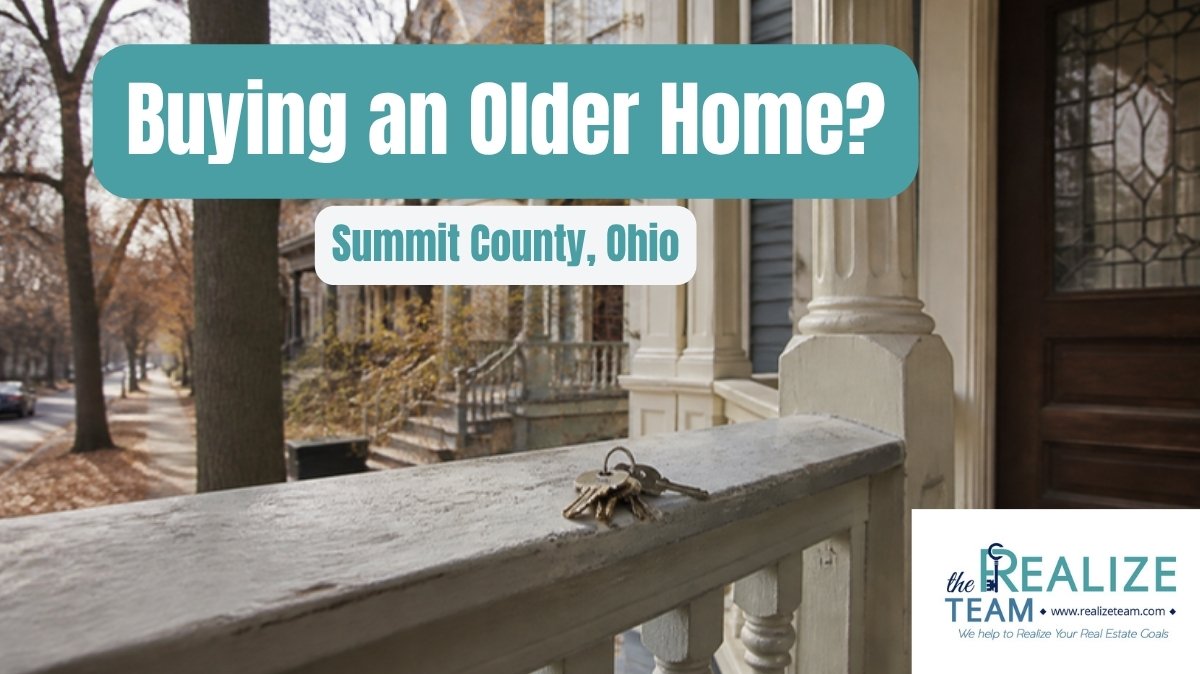
An older home is usually the one that makes somebody fall in love. The woodwork, the arched doorway, the proportions nobody builds at this price anymore. Then the inspection report arrives at sixty pages, and the romance turns into a list of questions nobody prepared you for.
So let's talk about what to know before buying an older home in Summit County, Ohio. What the age of a house changes, which four things to check before you write an offer, and what an inspection will and will not catch.
This article is general educational information and is not legal, tax, or financial advice. Condition, permits, and insurance depend on the specific property, so confirm them for any home before you buy.
Thinking about buying an older home in Summit County, Ohio?
The Realize Team helps buyers and sellers across Summit County navigate major life transitions with clarity, confidence, and local expertise.
Call (234) 200-6477 or send us a message on our contact page to start the conversation.
The short answer
An older home is not a worse home. It is a home whose condition you buy on purpose instead of by assumption. Older housing stock is common across Summit County, so the question is rarely whether to look at an older house. It is what to check, and in what order.
Four systems carry most of the risk, and all four live in the parts of a house nobody photographs. The wiring. The basement, and where water goes. The sewer line and the plumbing. And the ages of the roof, the furnace, and the water heater.
Ask one question about each: what has been replaced, and when. A century home with a short list of recent replacements is a different purchase from one that shows beautifully and has not been touched in decades, even when the two are priced within a few thousand dollars of each other.
First-time buyers tell us the same thing at the start: "I don't know what I don't know." With an older house, that is the right instinct. Our buying a home page lays out the path from the first conversation to the keys.
What an older home means in Summit County
Age means something different street by street here, and the towns are not interchangeable.
Cuyahoga Falls, our hometown, has century homes near Front Street and on some of the numbered streets, some really well updated and some not touched in a while. It also has whole streets of Cape Cods that builder Heslop put up in the 1950s and 60s, locally called Heslops, and some of those have no basement at all. Akron runs to ranches, split levels, colonials, and century homes, generally more affordable than the Falls. Hudson is known for century homes around its downtown square, at a higher price point. Tallmadge has colonials, split levels, ranches, and century homes around the historic circle.
A 1950s Cape Cod and a home built before 1920 are both older homes, and they give trouble in different places, so the inspections that matter are not the same for both. A house with no basement cannot have a wet basement, which removes one worry and raises different questions about where the mechanical systems sit.
The wiring, and the two questions that follow
Knob and tube
Knob and tube wiring or aluminum wiring in an older home can be a concern from a safety and an insurance standpoint. If an inspector flags it, two questions follow. How much of the house still runs on it, because partial replacement is common and the report may not say. And what your insurance carrier says about it, which is a call to make inside your inspection window rather than two weeks before closing.
The panel
Older homes may have fuse boxes rather than breaker panels, and some older panel brands have known issues that inspectors and insurance companies flag. An inspector notes the type and age of the panel, along with any improper wiring, double-tapped breakers, or work a previous owner did themselves. What a change costs is a licensed electrician's quote, and quotes are free while your contingency is open.
The basement, and where the water goes
Basement moisture and water intrusion are relatively common concerns in Summit County, given the regional climate and the age of much of the housing stock. That is not a reason to rule out an older home. It is a reason to look at the basement first instead of last.
An inspector looks for staining, efflorescence, active moisture, and musty odors, and evaluates the foundation walls and visible structure. Outside, grading matters: ground that slopes toward the house rather than away from it contributes to water getting in, and that is often a cheaper fix than a buyer fears.
Not every crack means the same thing. Horizontal cracks in block or poured concrete foundation walls can be more significant than vertical or diagonal ones, and an inspector may recommend a structural engineer look at a specific finding. That referral is information, not a verdict.
The sewer line and the plumbing
A standard home inspection does not include the sewer line, and on an older house that is the gap worth closing. A sewer scope runs a camera through the line, and it is worth considering for older homes where the original line may be aging or at risk of issues.
Inside, older homes can have galvanized steel, copper, or other plumbing that varies in age and condition, and galvanized steel can corrode over time and may need replacing. An inspector runs water at several fixtures at once to check pressure and drainage, notes the material, and notes the age of the water heater.
A private well or a septic system each needs its own testing, which a standard inspection typically does not cover. The Ohio Residential Property Disclosure Form asks the seller what sewer system serves the property and when a septic system was last inspected, so read it before your second showing.
Ages, not opinions: the roof and the mechanicals
With an older house, the useful question about the big systems is where each one sits in its life, not whether it runs today.
- The furnace. One twenty years old or more may be approaching the end of its useful life.
- Central air. A central air conditioning system typically lasts fifteen to twenty years.
- The roof. An inspector evaluates the roofing material, flashings, gutters, downspouts, and visible structure, and the age and remaining useful life matter as much as today's condition.
- The water heater. Its age and condition get noted, and it is one of the items that generates repair requests most often on older homes here.
None of that makes a house a poor buy. It makes it a house that should be priced for its condition, and it tells you what your first five years will cost. How Much House Can You Afford in Summit County, Ohio? is where those numbers meet your budget, and knowing your real number before you tour is the part of our method this belongs to.
Lead paint, asbestos, and radon
Lead paint and asbestos can be present in homes built before certain years, and both are things your inspector will flag. Asbestos can turn up in insulation, flooring, or other materials, and the Ohio disclosure form asks a seller what they know about asbestos, urea-formaldehyde foam insulation, and radon.
For homes built before 1978, a lead-based paint inspection is one of the inspections we talk through with buyers, alongside radon, mold, a well, or a septic system where those apply. Radon is a naturally occurring radioactive gas that can accumulate in homes and is a known health concern, and testing for it is relatively inexpensive.
Handle all three the same way: test, get a quote from a licensed specialist, then decide. None of them rules out a house on its own.
What an inspection catches, and what it does not
A home inspection is a visual examination of the accessible and visible components of a home. It is not a pass or fail verdict, and every home has findings, including a brand new one.
A typical inspection here takes two to four hours, and older homes take longer. The report can run thirty to sixty pages or more, with photographs, what the inspector observed, and recommendations to repair, to monitor, or to have a specialist look closer. The length is not a warning. Your agent's job is telling you which findings are significant, which are minor, and which are normal for a house of that age.
What an inspection does not do is open walls or replace the specialists. On an older home, consider a sewer scope on an aging line, radon testing, a chimney inspection where there is a fireplace, well and septic testing where those exist, and a structural engineer when foundation findings call for one. What Is a Home Inspection and Why Does It Matter in Summit County, Ohio? covers the full walk through, and What to Look for When Touring a Home in Summit County, Ohio covers what to notice before you order one.
If you want the whole buying process laid out before you tour anything, register for our free virtual buyer seminar here buymyneohome.com. It is a set of short videos you watch on your own time, covering pre-approval, offers and earnest money, inspections, and what happens between an accepted offer and closing day. Getting you educated before you tour is the part of our method this step belongs to.
What to do with what the inspection finds
Most of our purchase agreements include a ten-day inspection contingency, which is your window to have inspections done and decide how to proceed. Inside it you have five choices, and on an older home you will most likely use one of the middle three.
- Proceed as it is, when the findings are manageable and you would rather own the repairs yourself.
- Ask the seller for specific repairs before closing. They can agree, counter, or decline.
- Ask for a credit at closing instead, which leaves you in control of the work and the contractor.
- Renegotiate the price, when a significant finding changes what the home is worth.
- Walk away within the time your contract allows, with your earnest money.
Which one to use is a judgment call about your position and about what you want to own. Jessica is a Certified Negotiation Expert, and a repair conversation on an eighty year old house is what that training is for. What Is a Contingency in Real Estate in Summit County, Ohio? covers how the protection works. We make the suggestions. You make the decisions.
Common mistakes buyers make with an older home
Falling for the finishes and skipping the systems
A beautiful kitchen and original wiring often live in the same house. Ask what has been replaced and when, about the panel, the roof, the furnace, and the plumbing specifically.
Skipping the sewer scope
It is the one item outside the standard inspection, and one of the most expensive things to find after closing.
Waiving the inspection to win the house
On an older home that means agreeing to buy whatever an inspection would have found, which is a real risk rather than a small one. Biggest Mistakes Buyers Make in Summit County, Ohio covers the others.
Comparing an older home to a new one on price alone
They are two different purchases with two different first five years. Should You Buy a New Construction Home or an Existing Home in Summit County, Ohio? works through the trade, and our new construction page covers the other side of it.
Why local guidance matters in Summit County
Pace decides how much room you have to do this properly. In September 2026, 552 single family homes sold across Summit County at a median price of $251,000, with a median of 27 days on market, 100% of list price received, and 2 months of supply. In Cuyahoga Falls that same month, 50 single family homes sold at a median of $239,400, in a median of 14 days. Market conditions can change, and pricing or timing will depend on the specific property, location, and goals.
Those are weeks, not seasons, which is why the inspections you want get lined up before you write the offer rather than after it is accepted.
The Realize Team is a sister-led real estate team at Key Realty, helping buyers and sellers across Summit County, Ohio navigate major life transitions with clarity, confidence, and local expertise. We have been a Top Producer at Key Realty every quarter for the past four years, and every deal gets all three of us. Our buying a home in Cuyahoga Falls page covers our hometown, and our first-time buyer page covers pre-approval if this is your first purchase.
FAQ: What to Know Before Buying an Older Home in Summit County, Ohio
What should you know before buying an older home in Summit County, Ohio?
Check four things before you write an offer: the wiring and the panel, the basement and the grading around it, the sewer line and the plumbing material, and the ages of the roof, the furnace, and the water heater. For each one, ask what has been replaced and when, then order a general inspection plus the specialists the age of the house calls for.
Is knob and tube wiring a problem?
Knob and tube wiring or aluminum wiring in an older home can be a concern from a safety and an insurance standpoint. Ask how much of the house is still on it, get an electrician's quote, and call your insurance carrier while your inspection contingency is open.
Do you need a sewer scope on an older home?
A sewer scope is not part of a standard home inspection, and it is worth considering for older homes where the original line may be aging or at risk of issues. A camera goes through the line, and you see its condition before you are committed.
Does a home inspection cover everything in an older house?
No. It is a visual examination of the accessible and visible components, so it does not open walls or replace the specialists. A sewer scope, radon testing, a chimney inspection, well and septic testing, and a structural engineer all sit outside it.
Should you buy an older home or a newer one?
That depends on what you want to own and what you want to maintain. An older home can give you more house and more detail for the money, with systems that need attention sooner. The Realize Team helps buyers across Summit County, Ohio weigh the two against a real budget, and we are glad to walk an older house with you before you decide.
Final thoughts
Buying an older home in Summit County, Ohio is not a gamble, and it is not a leap of faith either. It is four questions, one inspection, two or three specialists, and a price that matches the condition you found. In that order, the house you fell for becomes the house you chose.
If you are weighing an older home here, let's talk about what to check before you write the offer. Call (234) 200-6477 or send us a message on our contact page to talk through your specific situation with The Realize Team at Key Realty.