2026-10-23 · 9 min read · Summit County
How to Sell an Inherited House in Summit County, Ohio
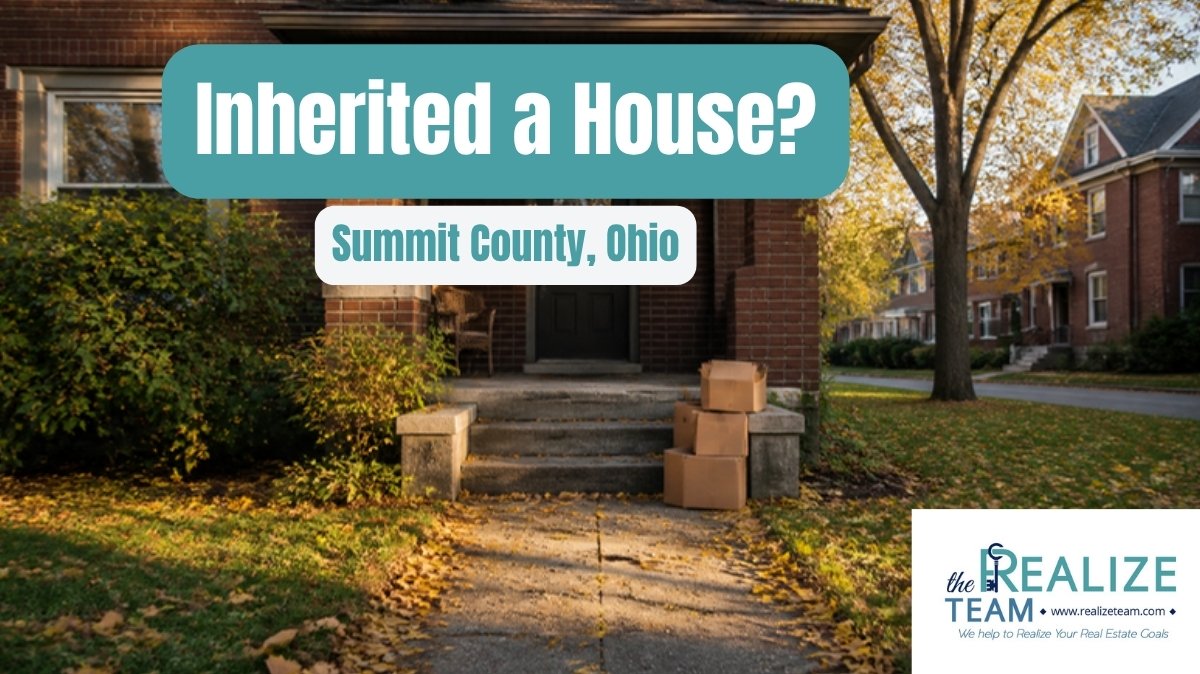
The house is still full. The mail still arrives. Somewhere in a drawer there is a deed, and nobody is completely certain whose name is on it. Selling an inherited house in Summit County, Ohio is rarely held up by the real estate part. It gets held up at the front door, where four or five decisions sit stacked on top of each other and none of them is obviously first.
Let's talk about the order these steps actually go in, so you can take the first one this week without guessing at the rest.
This article is general educational information and is not legal, tax, or financial advice. Every situation is different and readers should consult a qualified professional for advice specific to their situation.
Selling an inherited home in Summit County, Ohio?
The Realize Team helps buyers and sellers across Summit County navigate major life transitions with clarity, confidence, and local expertise.
Call (234) 200-6477 or send us a message on our contact page to start the conversation.
The short answer
The order is usually the same, whatever the family situation. Confirm who has legal authority to sell. Protect the house while it sits empty. Find out what it is worth. Then decide what happens to everything inside, and whether any repair is worth making. Listing comes near the end of that list, not the beginning.
Families tell us the same thing at the start: "I don't even know where to start." That is because most of them begin in the middle, with the contents, which is the slowest step and the one that carries all of the feeling. The legal question and the number are faster, and once you have both, every other decision gets easier.
Step 1: Find out who is allowed to sign
Nothing can be sold until it is clear who has authority to sign. That comes from how the home was titled, and from what a court has granted, if a court is involved at all.
Some homes pass without a probate case, because of how the deed was written or because the property was held in a trust. Others need a case opened first, and then the person the court appoints signs, sometimes with the court involved in the sale itself. A surviving spouse is in a different position again.
This part is genuine legal work, and it is worth an hour with an estate attorney before anything else happens. Ask two questions: who can sign a listing agreement and a deed, and does any part of this sale need court approval. Bring the deed, the death certificate, any trust documents, and the latest mortgage statement.
The title company will ask for those same documents before closing. What Does a Title Company Do When You Sell a House in Summit County, Ohio? covers that side of it, including why a deed still in a deceased owner's name takes extra steps. Our probate and trust home sales page explains how we work alongside your attorney.
Step 2: Protect the house while it sits empty
An empty house is a house nobody is watching, and ignoring it costs far more than handling it. Four things, before any decision about selling gets made.
Tell the insurance company the house is vacant
Coverage can change once nobody lives in a home, and a vacancy endorsement is a different product from the policy that has been in place for years. Ask the insurance agent directly.
Leave the utilities on
Heat through the winter protects the pipes, and power is needed for showings, an appraisal, and an inspection later. In Cuyahoga Falls, the city bills sewer, water, electric, and trash together, so there is one account to keep current rather than four.
Handle the mail, the lawn, and the snow
A full mailbox and an unshoveled driveway tell everyone the house is empty, and an unopened envelope is how a tax bill or an insurance notice gets missed.
Photograph every room before anything moves
Pictures taken today settle questions later about what was in the house and what condition it was in.
Step 3: Get the number before you touch the contents
Most families sort the belongings first and ask what the house is worth last. Turn that around. The value of the home shapes whether a repair is worth making, whether one person could buy out the others, and how much time the family can take.
An online estimate is not a valuation, and it is least reliable on exactly this kind of house. An automated figure cannot see that the kitchen is original or that the roof was replaced six years ago. We start with a Home Value Report, a conversation at the home looking together at comparable homes that genuinely match it. How we arrive at a price is the part of our method this step belongs to.
When several people inherit together, give every one of them the same copy of that report. Most family disagreements we see are not really about the house. They are two people working from two different numbers.
Step 4: Decide what happens to everything inside
This step stalls for months, and not because it is complicated. It is decades of belongings, and the person who could have told you what mattered is not here to ask. What to Do With Your Parents' House in Summit County, Ohio covers the wider question of selling, renting, or keeping it.
Start with one room, and pick the smallest one. Sort into four piles: keep, give to family, sell, donate. What is left is the part the professionals handle, and the whole house feels different once the first room is finished. Downsizing Checklist for Homeowners in Summit County, Ohio is a practical place to start.
For what is being sold, the right route depends on what is there. An estate sale company runs a sale inside the home and usually keeps a share of what sells. A tag sale or consignment suits a smaller group of items with real value. Donation handles volume, and a cleanout service takes what is left.
We have helped many families prepare a loved one's home for sale, and this is the part we plan with you: the estate sale or the consignment, then the contractors and the deep cleaning. Our probate and trust home sales page lays out that planning.
One rule saves a great deal of hurt. Nothing leaves the house until everyone entitled to something has walked through it, and that belongs in writing with a date on it.
Step 5: Sell as is, or fix it up first
You do not have to renovate an inherited home before selling it. You do have to decide, with real numbers instead of instinct, whether a repair pays you back.
Selling as is means the buyer takes the home in its present condition. It does not mean the buyer skips the inspection, and it does not stop a buyer from walking away over what the inspection finds. Can I Sell My House As-Is in Summit County, Ohio? explains what the phrase does and does not do.
Most families land in the middle: no renovation, but a full cleanout, a deep clean, and a short list of small repairs. Which repairs belong on that list has a real answer, and it is rarely the one people expect. What Should You Fix Before Selling a House in Summit County, Ohio? covers what buyers here respond to.
Condition also decides who is able to buy. A home that needs significant work draws a different group of buyers, and some loan programs carry requirements about the condition of a property, which is a question for a buyer's lender.
One more piece belongs here. Sellers in Ohio normally complete a residential property disclosure form about the condition of the home, and certain transfers connected to an estate are treated differently under that law, which is a question for your attorney. Either way, whatever you do know has to be shared, including the spring water in the basement that a sibling remembers and you never saw. Here is what a seller has to disclose in Ohio.
Taxes: one conversation, and have it before you sell
Taxes on a home you inherited work differently from taxes on a home you bought yourself. There are also the property taxes on the house, which keep coming due while it sits empty and while it is on the market.
We are not CPAs or attorneys, and this is the one piece of the sale where a paid opinion on your own situation is worth more than anything you will read online, including this article. Talk to a CPA before the house sells, not after the money is distributed. Bring the date of death and what you know about the condition of the home at that time.
When more than one person has to agree
A sale with one owner has one set of feelings in it. A sale with three siblings has three, plus a shared history. The real estate part is not usually what breaks down.
Three things prevent most of the trouble. Agree on who relays information between the family, the agent, and the attorney, which is a different job from who decides. Agree on how a price decision gets made before there is a price on the table. Put the timeline in writing, including the date the house gets cleaned out.
Coordinating multiple decision makers is part of how we handle these sales. Everyone gets the same report, the same updates, and the same answer, which takes the suspicion out of the middle of it. We make the suggestions. You make the decisions.
If you want the whole selling process laid out before you decide any of this, register for our free virtual seller seminar here sellmyneohome.com. It is a set of short videos you watch on your own time, covering what a home is really worth, how to prepare it and plan a timeline, how offers and contingencies work, and what happens at closing.
Common mistakes families make
Emptying the house before anyone has valued it
Furniture does not change what the house is worth, and a completely empty house is harder to picture living in than a sparsely furnished one.
Starting repairs nobody priced
Work begun out of guilt tends to cost more than it returns. Price it, then ask what it adds.
Letting the insurance lapse or the heat go off
One frozen pipe costs more than every other item on this list put together.
Waiting for everyone to feel ready at the same time
That day may never arrive. Agree on a date instead, and let people take part at the level they can manage.
Why local guidance matters in Summit County
An inherited home is often a longtime home, and longtime homes here come with patterns a national website cannot see. Cuyahoga Falls has century homes near Front Street and whole streets of Cape Cods built by Heslop in the 1950s and 60s, some with no basement at all. Tallmadge and Barberton have century homes too, and Akron's housing stock is generally more affordable than the Falls.
In September 2026, 552 single family homes sold across Summit County at a median price of $251,000, with a median of 27 days on market and 2 months of supply. In Cuyahoga Falls that same month, 50 single family homes sold at a median of $239,400, in a median of 14 days, at 100% of list price. Market conditions can change, and pricing or timing will depend on the specific property, location, and goals.
The Realize Team is a sister-led real estate team at Key Realty, helping buyers and sellers across Summit County, Ohio navigate major life transitions with clarity, confidence, and local expertise. We have been a Top Producer at Key Realty every quarter for the past four years. Our probate and trust home sales page covers the extra planning a family home needs, and our selling your home page covers the process from pricing through closing.
FAQ: How to Sell an Inherited House in Summit County, Ohio
Do you have to go through probate to sell an inherited house in Ohio?
Not always. It depends on how the home was titled and whether it was held in a trust, and in some situations a court case has to be opened before anyone can sign. An estate attorney can tell you which applies once they have seen the deed.
Can you list the house before the estate is settled?
Sometimes, and sometimes not. What matters is whether the person signing has authority to sign and whether the sale needs court approval. Ask your attorney first, because the title company will ask for proof of it before closing.
Do we have to empty the house before we list it?
No. Buyers need a home that is presentable, not empty. Many families do a cleanout and a deep clean, leave some furniture in place, and handle the rest once the home is under contract.
Can we sell an inherited house as is?
Yes. As is means the buyer takes the home in its present condition. The buyer can still have it inspected and can still walk away over what the inspection finds, so as is is a pricing decision rather than a way to avoid the subject.
Who pays the mortgage, taxes, and utilities while the house is for sale?
Those bills keep arriving and somebody has to keep them current, usually from estate funds or from the people who inherited the home. How that works in your situation is a question for your attorney, and it is one reason to decide the timeline early.
Final thoughts
Selling a house that someone you loved lived in is not one decision. It is a short list of smaller ones, and they go better in order: who can sign, how the house gets protected, what it is worth, what happens to what is inside, and only then what it gets listed for. Taken that way, the step in front of you is always small enough to do.
If you are sorting through an inherited house in Summit County, Ohio and are not sure what comes first, let's talk it through. Call (234) 200-6477 or send us a message on our contact page to talk through your specific situation with The Realize Team at Key Realty.