2026-11-23 · 9 min read · Summit County
Can You Stay in Your House After You Sell It in Ohio?
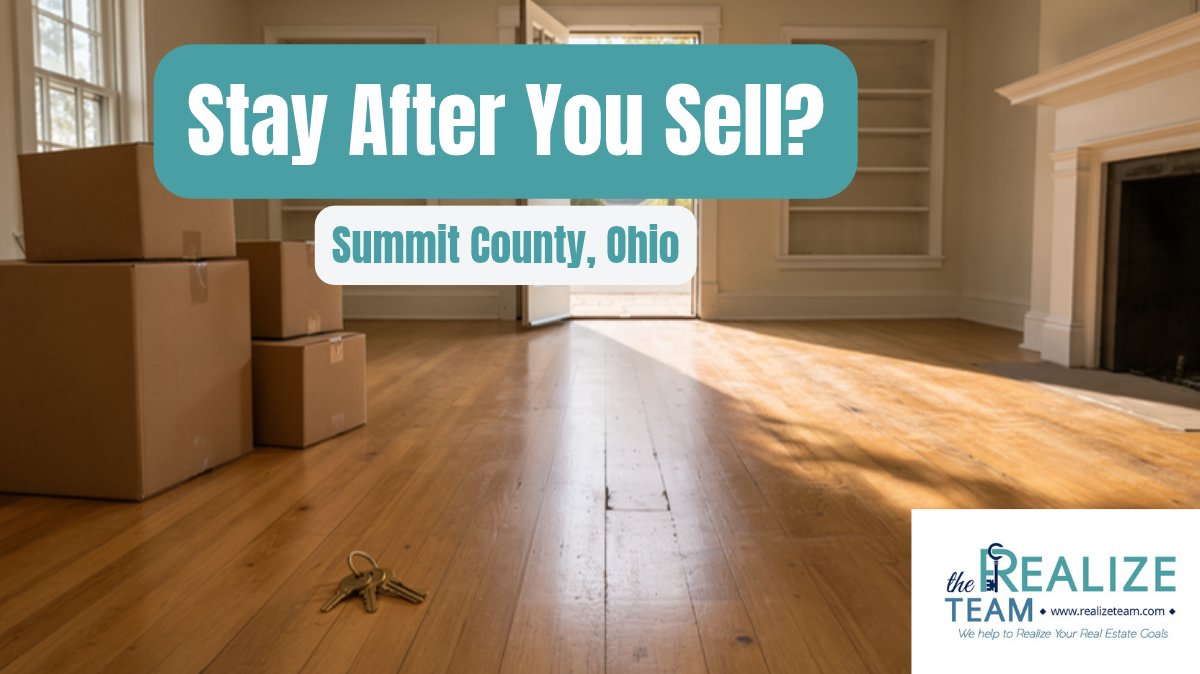
You have lived in the same Cuyahoga Falls house for thirty some years, the ranch you want is not on the market yet, and somebody has told you that the day you sell is the day you have to be out. That last part is where most downsizing plans stall.
So let's talk about whether you can stay in your house after you sell it in Ohio. What the arrangement is called, how it gets written into the contract, why a buyer would agree to it, and what else is on the table when the two dates refuse to line up.
This article is general educational information and is not legal, tax, or financial advice. Staying in a home after closing is a contract matter and every term in it is negotiated, so have your attorney review anything you are asked to sign.
Planning a downsizing move in Summit County, Ohio?
The Realize Team helps buyers and sellers across Summit County navigate major life transitions with clarity, confidence, and local expertise.
Call (234) 200-6477 or send us a message on our contact page to start the conversation.
The short answer
Sometimes, yes. Selling a home and then living in it a while afterward is a real arrangement with a real name: a rent-back, also called a leaseback or post-closing occupancy. You close, the money moves, the deed changes hands, and you stay on for an agreed stretch as a tenant of the person who now owns the place.
Thirty to sixty days after closing is the usual range. Rent is normally part of it, and in competitive situations some buyers will let the sellers stay without charging rent at all. None of that happens by default. A buyer who needs to be in the house the week they close is a buyer who will say no.
So two things decide whether it is realistic for your sale: whether the buyer your house attracts has somewhere else to live in the meantime, and whether the arrangement is written into the contract rather than agreed to in a hallway at the closing table.
Downsizers tell us the same thing at the start: "What if I sell and can't find anything." A rent-back is one answer to that question, and it is not the only one. Our downsizing page covers sequencing the sale and the next home, which is the larger question underneath this one.
What a rent-back is, and what it is not
A rent-back makes you a tenant in a house you used to own, and almost everything else follows from that one sentence. The buyer holds the deed and insures the structure. You insure your own belongings, the way any renter does. The utilities, the lawn, the snow, and the condition of the house on the day you leave all belong to whoever the written agreement says they do.
What a rent-back is not is an extension of owning the place. Changes to the house are not yours to make anymore, the new owner's contractor can be scheduled for the Monday after you go, and staying past the agreed date is a real problem for somebody with a moving truck booked.
It is a cushion rather than a plan. The sellers who use one well already know where they are going and need a little room to get there. How Do You Know It's Time to Downsize in Summit County, Ohio? works through that earlier decision.
How it gets written into the contract
Possession is a term, not a fact
In most sales, possession of the home changes hands at closing, which is why people assume the closing date and the moving date are one event. They are two, and the second one is negotiable. Asking for possession a few weeks after closing is a term you put in the deal, the same way price is.
Everything gets a date or a number
The questions a written agreement has to answer are not complicated, and leaving any of them vague is where the trouble starts. How long you stay, and the exact date you are out. What you pay, when, and to whom. Which utilities stay in your name. Who handles a repair during that stretch. What happens if you are not out on the date. Your attorney is the right person to review that language, not us and not the buyer's agent.
Your insurance has to change with it
A homeowner's policy covers a house you own, and after closing you do not own it. Call your insurance company before the closing date and tell them what is happening, so your belongings are covered for the weeks you are still in the building.
The walkthrough happens before you leave, not after
A buyer normally does a final walkthrough within 24 to 48 hours before closing, so with a rent-back that walkthrough happens while your furniture is still in the house. The buyer is agreeing to accept the home in the condition it is in weeks later, so put in writing what condition that means. What Happens at a Final Walkthrough in Summit County, Ohio? covers what a buyer is checking, and What to Expect on Closing Day in Summit County, Ohio covers the day itself.
Will a buyer actually agree to it?
Some will and some will not, and which one you have is usually clear early. A buyer renting month to month, or buying the house as an investment, or whose own sale closes later than yours, has room to be flexible. A buyer who has already sold their own home and has to be out of it on a date has none.
Because it is a term, it trades against the other terms. Buyers weigh it alongside price, contingencies, and timing when they decide what to offer. Sometimes it costs nothing. Sometimes it costs a little somewhere else in the deal, and knowing that going in beats discovering it in week three.
So raise it at the beginning. We put your timing into the listing conversation before the house ever goes live, so it arrives inside the offer instead of being sprung after acceptance. Jessica is a Certified Negotiation Expert, and this is the kind of term that training is for. One question belongs to the buyer rather than to you: financing can shape what they are able to agree to, so their lender confirms whether anything in their loan affects how long you stay. How your offer gets negotiated is the part of our method this belongs to.
The other ways to close the gap between two homes
Move the closing date instead
The simplest fix is often the dullest one. If your buyer can close three weeks later, you have bought the same time without becoming anybody's tenant.
Make your purchase contingent on your sale
A home sale contingency means the purchase of your next house depends on your current one selling within a set window. It lowers your financial risk and makes your offer less competitive, which is the trade. What Is a Contingency in Real Estate in Summit County, Ohio? covers how contingencies work.
Ask a lender about bridge financing
A bridge loan uses the equity in your current home to fund the next purchase before the current one sells. Bridge loans typically carry higher interest rates than a standard mortgage and come with fees, and not every lender offers them, so have that conversation early.
Coordinate the two closings
Two closings can sometimes be scheduled on the same day or within a few days of each other, with the proceeds from your sale funding your purchase. It removes the gap and leaves very little room for a delay on either side, which is why it takes a team watching both files at once.
Plan for temporary housing anyway
A short-term rental, an extended stay hotel, a month-to-month apartment, time with family, and a storage unit are all ordinary answers, and thinking about them in advance takes most of the pressure out of needing one. How to Buy and Sell at the Same Time in Summit County, Ohio lays these out side by side, and Should You Sell First or Buy First in Summit County, Ohio? covers the order.
If you want the whole selling process laid out before you commit to any of this, register for our free virtual seller seminar here sellmyneohome.com. It is a set of short videos you watch on your own time, covering what your home is really worth, how to prepare it and plan a timeline, how offers and contingencies work, and what happens at closing. Three lessons go straight at this one: When to Start Prepping Your Home to Sell, Home Sale Contingencies Explained, and You Got an Offer, How We Review It With You.
Common mistakes sellers make with this
Bringing it up after the offer is accepted
Asking for a term late makes the buyer re-decide a deal they already made. Asking for it up front makes it part of the deal they are deciding on.
Treating weeks as months
Thirty to sixty days is the common range, and it is not a season. If what you really need is until spring, the answer is a different strategy rather than a longer rent-back.
Assuming it will be rent free
Some buyers do allow it, mostly when they are competing for the house. Plan on paying, and treat free as the pleasant surprise rather than the budget.
Relying on a handshake
A friendly buyer at the closing table saying take your time is not an agreement, and it does not survive their circumstances changing.
Forgetting the move still has to happen
A rent-back moves the date and does nothing about the attic. Start on the house while it is listed, one room at a time. What to Do With Furniture and Keepsakes When You Downsize in Summit County, Ohio covers that part, and Biggest Mistakes Sellers Make in Summit County, Ohio covers the rest of the list.
Why local guidance matters in Summit County
The Realize Team is a sister-led real estate team at Key Realty, helping buyers and sellers across Summit County, Ohio navigate major life transitions with clarity, confidence, and local expertise. We have been a Top Producer at Key Realty every quarter for the past four years, and every deal gets all three of us.
Pace is the reason this question comes up here at all. In October 2026, single family homes across Summit County sold at a median price of $237,600, in a median of 22 days, at 100.0% of list price. In Cuyahoga Falls that same month the median was $246,000 in 17 days. Market conditions can change, and pricing or timing will depend on the specific property, location, and goals.
Seventeen days is the whole problem in one number, because a house that sells that fast can leave a seller holding proceeds, a closing date, and nothing signed on the next place.
What you are downsizing out of shapes the timing too. Cuyahoga Falls has whole streets of Cape Cods that builder Heslop put up in the 1950s and 60s, some with no basement at all, and century homes near Front Street with stairs in them. The single floor ranches and condos downsizers want are a smaller pool than the houses they are leaving, so the next home often takes longer to find than the current one takes to sell. Should You Downsize to a Condo or a Ranch Home in Summit County, Ohio? works through that choice.
Even the utility question is local here. Cuyahoga Falls runs its own municipal utilities, so sewer, water, electric, and trash arrive on one bill, which makes who pays what during a rent-back one account to sort out rather than four.
A possession date is also easier to negotiate when you already know what the house is worth and what you would net. A Home Value Report is a conversation at your home, looking together at photographs of comparable homes that genuinely match yours, and how we arrive at a price is the step it belongs to.
Jessica was born and raised in Cuyahoga Falls and still lives there, and our office is in Fairlawn at 3040 West Market Street. Once you are under contract, our sister Lauren takes over the paperwork and the deadlines, which is where a possession agreement either holds together or does not. Our downsizing in Cuyahoga Falls page covers our hometown, and selling your home lays out the process from pricing through closing. We make the suggestions. You make the decisions.
FAQ: Can You Stay in Your House After You Sell It in Ohio?
Can you stay in your house after you sell it in Ohio?
Sometimes. The arrangement is called a rent-back or post-closing occupancy, and it lets you live in the home as a tenant for an agreed period after closing. It has to be negotiated with the buyer and written into the contract, and a buyer who needs to move in right away will not agree to it.
How long can a seller stay in the house after closing?
Thirty to sixty days after closing is the common range. The exact length is whatever the buyer and seller agree to in writing, and shorter is easier to get agreement on than longer.
Do you have to pay rent to stay in your house after you sell it?
Usually. Rent is normally part of the arrangement, and in competitive situations some buyers will let the sellers stay without charging rent. Plan on paying and treat anything else as a bonus.
What should a rent-back agreement cover?
The move-out date, what you pay and when, which utilities stay in your name, who handles repairs during that period, and what happens if you are not out on time. Ask your attorney to review the language before you sign.
What are the alternatives if the buyer will not agree?
Move the closing date, make your purchase contingent on your sale, ask a lender about bridge financing, coordinate the two closings, or plan for temporary housing and storage. Which one fits depends on your finances and your timeline.
Final thoughts
Whether you can stay in your house after you sell it in Ohio comes down to what the buyer agrees to and what gets written down. The arrangement is ordinary, and it is usually measured in weeks rather than months.
So decide what you need before you list. If a few weeks after closing would make the whole move work, say so at the listing conversation and let it be part of the deal from the first offer instead of a favor asked at the end.
If you are planning a downsizing move in Summit County, Ohio and the dates are what is holding you up, let's map it out. Call (234) 200-6477 or send us a message on our contact page to talk through your specific situation with The Realize Team at Key Realty.