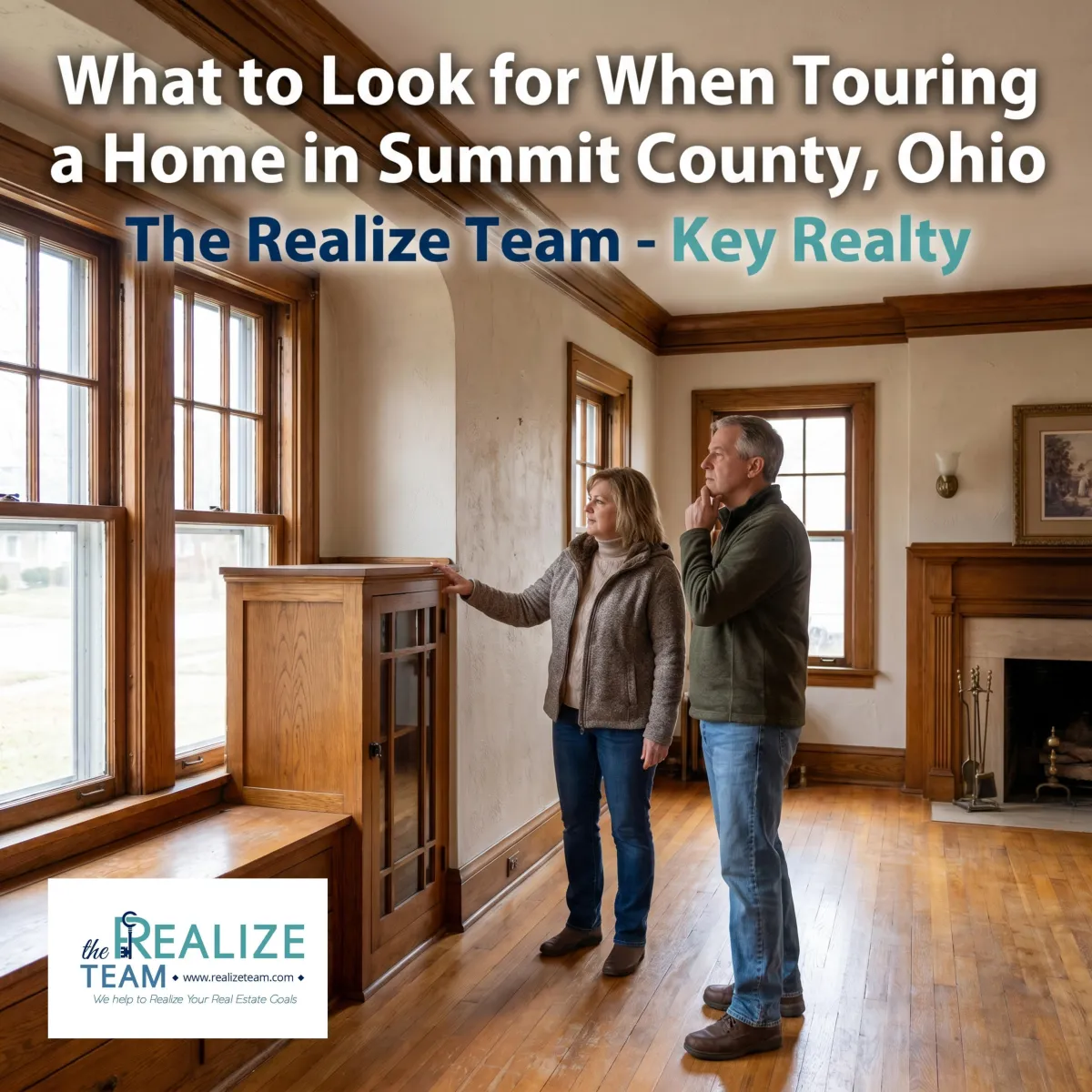
What to Look for When Touring a Home in Summit County, Ohio | The Realize Team
If you are getting ready to tour homes in Summit County, Ohio, walking through a house can feel exciting and overwhelming at the same time.
There is a lot to take in. The layout, the condition, the size of the rooms, the natural light, the neighborhood, the yard, the storage, the systems. And when you are emotionally engaged with a home you love, it can be easy to miss things that matter or to let a beautiful kitchen distract you from a basement that raises questions.
The buyers who make the most confident decisions during a home search are almost always the ones who know what to look for before they start touring. They have a clear framework in their mind so they can evaluate each home objectively rather than reactively.
The Realize Team helps buyers and sellers across Summit County, Ohio navigate major life transitions with clarity, confidence, and local expertise. And helping buyers tour homes with clear eyes and a practical checklist is one of the ways we help our clients avoid costly surprises.
If you want to understand the full buying process from start to finish, read First-Time Homebuyer Guide for Summit County, Ohio. And if you want to understand what happens after you find the right home and make an offer, read What Happens After Your Offer Is Accepted in Summit County, Ohio?.
Here is what to look for when you are touring a home in Summit County.
Before you walk through the front door
The tour starts before you ever step inside. What you observe on the outside of the home and from the street sets the context for everything you will see inside.
Curb appeal and exterior condition
Look at the overall condition of the exterior. Is the roof visibly worn, missing shingles, or showing signs of age? Are the gutters intact and properly attached? Is the siding in good condition or does it show signs of damage, rot, or deferred maintenance?
Pay attention to the grading around the foundation. Does the ground slope away from the home which helps water drain away, or does it slope toward the home which can contribute to water intrusion in basements and crawl spaces?
Look at the driveway and walkway. Are there significant cracks or settling that suggest shifting ground?
Check the windows from the outside. Do they appear to be in good condition or are there signs of rot, broken seals, or damaged frames?
None of these observations mean the home is a bad choice. But they give you important context before you walk in and they help you know what questions to ask.
The neighborhood and immediate surroundings
While you are outside take a moment to observe the neighborhood.
How are the neighboring homes maintained? A well-maintained neighborhood generally supports home values over time.
What is the traffic like on the street? Is it a through street with significant traffic or a quieter residential street?
What is nearby? Are there amenities, parks, or conveniences that add to the appeal? Are there any nearby uses that could affect your enjoyment of the home?
These observations matter because you are not just buying a house. You are buying into a location. And location affects daily life in ways that the house itself cannot overcome.
For more context on Summit County's different communities and what to expect in each area, read Best Neighborhoods in Summit County, Ohio.
What to look for inside the home
Once you walk through the front door, here is a practical framework for what to pay attention to as you move through each space.
The entry and main living areas
Start by getting a feel for the overall flow of the home. Does the layout make sense for how you actually live? Can you picture your furniture in the spaces? Do the rooms connect in a way that feels functional?
Pay attention to natural light. Which direction does the home face? Are the main living areas bright or do they feel dark even during the day?
Look at the floors throughout the main areas. What condition are they in? Are there areas of significant wear, staining, or damage?
Check the walls and ceilings carefully. Look for cracks, water stains, or discoloration that might suggest settling, leaks, or moisture issues. A yellow or brown stain on a ceiling is worth asking about specifically.
Look at the condition of the trim, doors, and hardware throughout. Do they feel solid and well-maintained or do they show significant wear?
The kitchen
The kitchen is one of the spaces buyers care most about and one of the spaces worth evaluating carefully.
Turn on the faucet and check the water pressure. Does it feel strong and consistent?
Open and close the cabinet doors and drawers. Do they work smoothly or are there signs of damage, warping, or poor installation?
Check under the sink for signs of water damage, staining, or active leaks.
Look at the condition of the countertops. Are there significant chips, cracks, or stains?
Check whether the appliances that are staying with the home are in working order. Turn on the range burners if possible. Open the refrigerator and dishwasher.
Look at the overall condition of the space. Does it feel well maintained or does it show signs of neglect?
The bathrooms
Bathrooms are one of the areas where deferred maintenance and moisture issues tend to show up most clearly.
Check the caulking and grout around the tub, shower, and sink. Is it in good condition or is it cracked, missing, or showing signs of mold?
Run the faucets and check the water pressure. Is the hot water working?
Flush the toilet and make sure it operates properly.
Look at the floor around the base of the toilet and tub. Soft or discolored flooring in those areas can indicate water damage beneath the surface.
Check the condition of the vanity, fixtures, and hardware. Are they functional and in reasonable condition?
Look at the ceiling and walls for any signs of moisture, staining, or inadequate ventilation.
The bedrooms
Walk through each bedroom with an eye toward practical functionality.
Are the rooms large enough for your needs? Can you picture your furniture fitting comfortably?
Check the closet sizes. Are they adequate for your storage needs?
Look at the windows in each bedroom. Are they in good condition and do they open and close properly?
Are there enough electrical outlets and are they conveniently located?
Pay attention to natural light and air flow in each room.
The basement
The basement deserves careful attention in Summit County where older housing stock and the regional climate mean basement moisture and water intrusion are relatively common concerns.
Look for any signs of water intrusion including staining on the walls or floor, efflorescence which is the white mineral deposits that form on concrete when water moves through it, active moisture on the walls, or a musty smell.
Check the condition of the foundation walls. Are there significant cracks? Horizontal cracks in block or poured concrete walls can be a more serious structural concern than vertical or diagonal cracks.
Look at the mechanical systems in the basement including the furnace, water heater, and electrical panel. Note their age and apparent condition. These are items your inspector will evaluate in detail but getting a general sense during the tour is useful.
Is the basement finished or unfinished? If it is finished, look carefully at the walls and floors for any signs that moisture issues have been covered up rather than resolved.
The attic
If you can safely access the attic during the tour, it is worth a look.
Check for adequate insulation. Insufficient insulation can affect both energy efficiency and comfort.
Look for signs of roof leaks including staining on the rafters or decking.
Check for proper ventilation.
Look for any signs of pest activity including droppings or damaged wood.
The garage
If the home has a garage, check that the garage door operates properly and that the opener works.
Look at the condition of the floor. Are there significant cracks or staining that might suggest issues?
Check the walls and ceiling of the garage for any signs of water intrusion or damage.
The mechanical systems
Understanding the age and condition of the major mechanical systems helps you anticipate what maintenance and replacement costs might look like after you take ownership.
HVAC system
How old is the furnace and air conditioning system? A furnace that is 20 years old or more may be approaching the end of its useful life. Air conditioning systems typically last 15 to 20 years.
Does the system appear to be well maintained? Are there service stickers showing regular maintenance history?
Turn on the heating or cooling during the tour if possible and notice whether it operates smoothly and whether the airflow feels consistent throughout the home.
Water heater
How old is the water heater? Most water heaters have a useful life of 8 to 12 years. Check the label on the unit for the manufacture date.
Is it a tank or tankless system? Is it gas or electric?
Electrical panel
Look at the electrical panel. Is it a modern breaker panel or an older fuse box? Older electrical systems can be a concern from a safety and insurance standpoint and may need to be updated.
Does the panel appear to have adequate capacity for the home's needs?
Note the brand of the panel. Some older panel brands have known issues that insurers and inspectors flag. Your inspector will evaluate this in detail.
Plumbing
Turn on multiple faucets throughout the home and flush toilets while faucets are running to get a sense of the water pressure and whether the system handles demand well.
If you can see any plumbing in the basement or utility areas, note what type of pipe it is. Older homes in Summit County may have galvanized steel, copper, or other types of plumbing that vary in age and condition.
Are there any visible signs of leaks, corrosion, or past repairs?
Questions to ask during the tour
Beyond what you observe yourself, asking the right questions during a tour gives you important context.
How old is the roof and when was it last replaced?
How old are the major mechanical systems including the furnace, air conditioning, and water heater?
Has there ever been any water intrusion in the basement or anywhere else in the home?
Are there any known issues with the property that the seller is aware of?
What updates or renovations have been made and when?
How long has the seller lived in the home and why are they selling?
What are the utility costs typically like?
Are there any HOA fees or restrictions?
Your agent can help you get answers to these questions and can flag anything that warrants closer attention.
What to do after the tour
After you finish touring a home, take a few minutes to write down your impressions while they are fresh.
Note the things you liked, the things you had questions about, and anything that felt like a concern. If you are touring multiple homes in a day, they can blur together quickly without notes.
If you are seriously interested in a home, a second showing before making an offer can be valuable. A second look often reveals things you missed or did not have time to fully evaluate during the first visit.
And remember that the home inspection is a much more thorough evaluation than what you can do during a showing. Your observations during the tour help you make an informed decision about whether to pursue the home, but the inspection is where the detailed condition assessment happens.
For more on what the inspection involves and why it matters, read What Is a Contingency in Real Estate in Summit County, Ohio?.
What to look for if you are buying an older home in Summit County
A significant portion of Summit County's housing stock was built in the mid-20th century or earlier. Older homes often have tremendous character and solid construction, but they also come with specific things worth paying extra attention to during a tour.
Knob and tube wiring or aluminum wiring in older homes can be a concern from a safety and insurance standpoint.
Galvanized steel plumbing in older homes can corrode over time and may need to be replaced.
Older windows may be single-pane and significantly less energy efficient than modern windows.
Older homes may have less insulation than current standards require which affects both energy efficiency and comfort.
Lead paint and asbestos can be present in homes built before certain years and are things your inspector will flag.
None of these automatically make an older home a bad choice. Many buyers love the character and craftsmanship of older Summit County homes. But going in with realistic expectations about what maintenance and updates might be needed is part of making a confident and well-informed decision.
If you are downsizing into a smaller home
For buyers who are downsizing, touring homes comes with an additional layer of evaluation.
You are not just assessing the home's condition and features. You are also thinking about whether the home will support the lifestyle and practical needs of the next chapter.
Pay particular attention to:
One-floor living options if stairs are a concern.
The size and functionality of the kitchen and main living areas for how you actually spend your time.
Storage and whether the home can accommodate the belongings you plan to bring.
The maintenance requirements of the yard and exterior.
Proximity to amenities, healthcare, and family that matter to your next chapter.
If downsizing is part of your move, read How to Downsize Without Feeling Overwhelmed in Summit County, Ohio for guidance on how to approach that broader transition.
FAQ: What to Look for When Touring a Home in Summit County, Ohio?
What should I look for when touring a home? Focus on the overall condition of the exterior and interior, the mechanical systems including the HVAC, water heater, and electrical, any signs of water intrusion or moisture issues, the functionality of the layout, and anything that raises questions worth following up on with the inspector.
Should I bring anything to a home tour? A notepad or your phone for taking notes and photos, a list of questions you want to ask, and a measuring tape if you want to check furniture fit in specific spaces.
Can I take photos during a home tour? In most cases yes, but it is courteous to ask the seller's agent for permission before photographing. Photos help you remember details when comparing multiple homes.
How long should a home tour take? A thorough tour of a typical Summit County home typically takes 20 to 45 minutes. Rushing through a tour means missing things that matter.
What are the most important things to look for in the basement? Signs of water intrusion, the condition of the foundation walls, the age and condition of the mechanical systems, and any unusual smells that might suggest moisture or mold.
How does The Realize Team help buyers during home tours? The Realize Team accompanies buyers across Summit County, Ohio during home tours, helping them evaluate each property with clear eyes, asking the right questions, and identifying anything worth closer attention before making an offer.
Final thoughts
Touring a home well is a skill. And like any skill it gets better with practice and with a clear framework for what to look for.
The buyers who make the most confident decisions are the ones who walk into each tour with clear eyes, a practical checklist in mind, and the support of an agent who can help them evaluate what they are seeing accurately.
If you are getting ready to start touring homes in Summit County and want to make sure you are approaching the process with the right foundation, we would love to help.
Register for our free virtual buyer seminar here http://buymyneohome.com for a complete walkthrough of the buying process including what to look for during home tours.
Or reach out through our contact page https://realizeteam.com/contact-us and we would be happy to answer your questions and help you prepare for your home search.
Abby Smith and Jessica Isakov The Realize Team - Key Realty Serving buyers and sellers across Summit County, Ohio Helping clients navigate major life transitions with clarity, confidence, and local expertise. 234-200-6477 www.realizeteam.com


