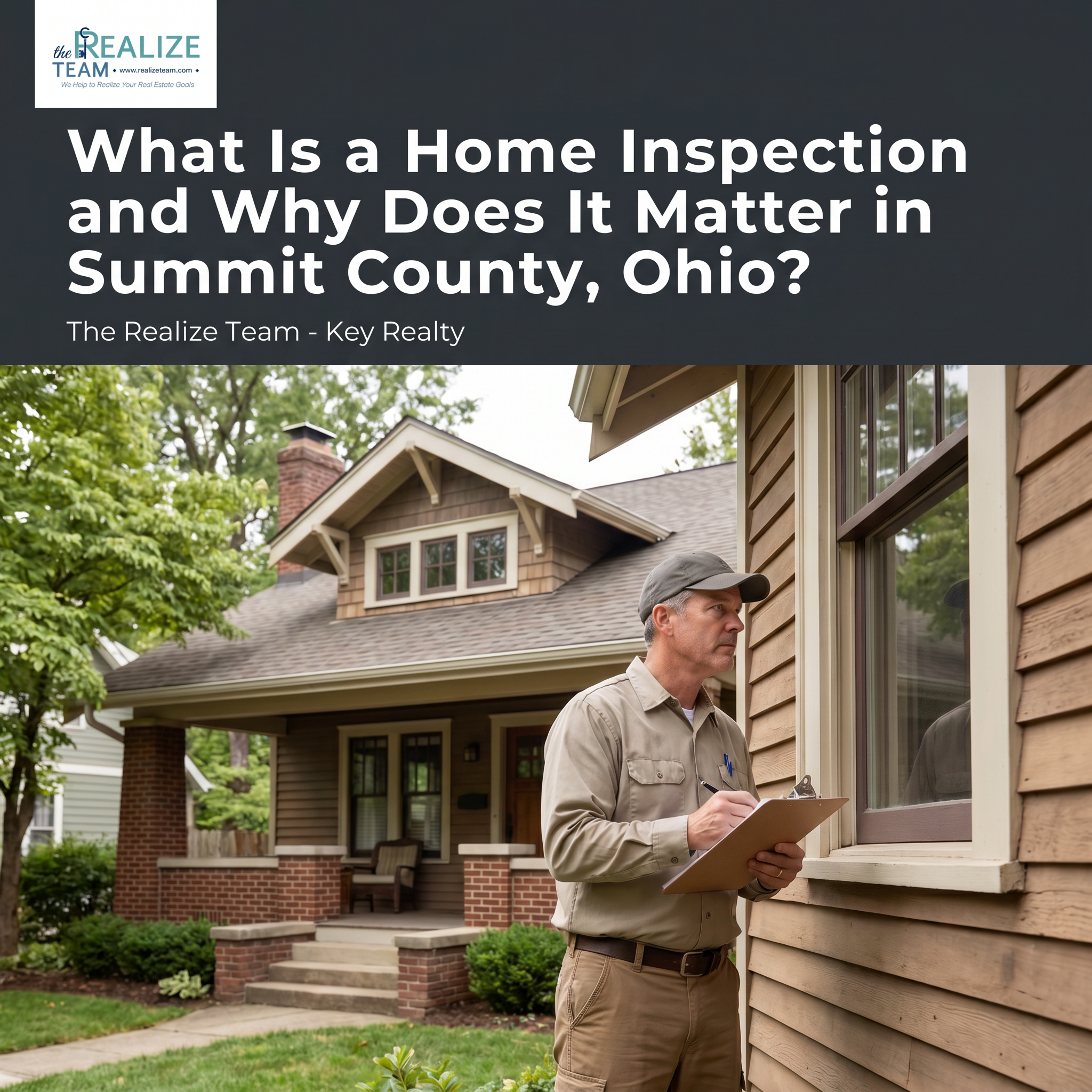
What Is a Home Inspection and Why Does It Matter in Summit County, Ohio? | The Realize Team
If you are buying or selling a home in Summit County, Ohio, the home inspection is one of the most important steps in the entire process.
And yet it is also one of the most misunderstood.
A lot of buyers walk into their first inspection expecting a pass or fail verdict. A lot of sellers brace for it like it is a judgment on their home. And a lot of people on both sides are not quite sure what the inspector is actually doing, what the report means, or what happens next.
That gap in understanding creates unnecessary anxiety around a step that, when you know what to expect, is actually one of the most straightforward and valuable parts of the transaction.
The Realize Team helps buyers and sellers across Summit County, Ohio navigate major life transitions with clarity, confidence, and local expertise. And helping our clients understand the home inspection before they are in the middle of it is exactly the kind of preparation that makes the whole process feel more manageable.
You can also watch our full video breakdown of the home inspection process here:
If you want to understand everything that happens after your offer is accepted, read What Happens After Your Offer Is Accepted in Summit County, Ohio?. And if you want to understand how contingencies protect you during the inspection process, read What Is a Contingency in Real Estate in Summit County, Ohio?.
What is a home inspection?
A home inspection is a visual examination of the physical condition of a home conducted by a licensed home inspector. It is typically ordered by the buyer after an offer is accepted and before the transaction closes.
The inspector evaluates the accessible and visible components of the home and produces a written report documenting their findings. That report gives the buyer a detailed picture of the home's condition so they can make an informed decision about whether and how to proceed with the purchase.
A home inspection is not a pass or fail evaluation. There is no score. There is no certificate of approval. There is simply a detailed assessment of what the inspector observed and what they recommend for further evaluation or attention.
Every home will have inspection findings. Even brand new homes have things inspectors flag. The presence of findings does not mean the home is a bad purchase. It means you have information.
Why the home inspection matters so much
The home inspection matters for one fundamental reason. It gives you information about what you are buying before you are legally committed to buying it.
Without an inspection, you are purchasing a home with limited knowledge of its actual condition. With an inspection, you have a detailed picture of the mechanical systems, the structural components, the visible deficiencies, and the areas that may need attention now or in the future.
That information is powerful. It allows you to:
make a more informed decision about whether to proceed
negotiate repairs or credits based on what was found
plan for maintenance and future costs
understand the home you are moving into before you move in
avoid costly surprises after closing
For sellers, understanding what an inspection typically covers helps you anticipate what buyers will see and make strategic decisions about what to address before listing.
What does a home inspector actually look at?
A licensed home inspector evaluates the visible and accessible components of the home. Here is what is typically covered in a standard home inspection in Summit County, Ohio.
Roof The inspector evaluates the condition of the roofing material, flashings, gutters, downspouts, and visible roof structure. They look for signs of damage, wear, improper installation, or issues that could lead to leaks.
Age of the roof and remaining useful life are important considerations. In Summit County where older housing stock is common, roof age and condition come up frequently in inspection reports.
Foundation and structure The inspector looks for visible signs of structural concerns including cracks in the foundation walls, evidence of settling or shifting, and anything that suggests the structural integrity of the home may be compromised.
Horizontal cracks in block or poured concrete foundation walls can be a more significant concern than vertical or diagonal cracks. Your inspector will note what they observe and may recommend a structural engineer evaluate specific findings.
Exterior The inspector evaluates the condition of the siding, trim, windows, doors, and other exterior components. They look for signs of damage, rot, inadequate caulking, or deferred maintenance.
Grading around the foundation is also evaluated. Ground that slopes toward the home rather than away from it can contribute to water intrusion in basements and crawl spaces.
Garage The inspector checks that the garage door and opener operate properly, evaluates the condition of the garage structure, and looks for any fire safety concerns between the garage and living space.
Interior living spaces The inspector walks through every room evaluating walls, ceilings, floors, windows, and doors. They look for signs of water damage, staining, cracks, settling, and anything that suggests a concern with the home's condition.
Kitchen The inspector evaluates visible kitchen components including the sink, faucet, disposal, dishwasher, and range hood. They check under the sink for signs of leaks or water damage.
Bathrooms Bathrooms receive careful attention because they are common locations for moisture and water damage. The inspector evaluates the condition of fixtures, caulking, grout, flooring around the tub and toilet, ventilation, and visible plumbing.
Attic The inspector accesses the attic if safely accessible and evaluates insulation levels, ventilation, the underside of the roof decking, and any signs of leaks, pest activity, or moisture.
Basement and crawl space The basement gets careful attention in Summit County where moisture and water intrusion are relatively common concerns given the regional climate and the age of much of the housing stock.
The inspector looks for signs of water intrusion including staining, efflorescence, active moisture, and musty odors. They evaluate the condition of the foundation walls, the mechanical systems, and any visible structural components.
HVAC system The inspector evaluates the heating and cooling systems including the furnace, air conditioning, and any visible ductwork. They note the approximate age of the equipment and its apparent condition.
Age matters here. A furnace that is 20 years old or more may be approaching the end of its useful life. A central air conditioning system typically lasts 15 to 20 years. Understanding where the major systems are in their lifecycle helps you plan for future costs.
Plumbing The inspector runs water at multiple fixtures simultaneously to evaluate water pressure and drainage. They evaluate the visible plumbing including the water heater, supply lines, and drain lines. They note the type of plumbing material and its apparent condition.
Electrical system The inspector evaluates the electrical panel, visible wiring, outlets, switches, and fixtures. They look for safety concerns including improper wiring, double-tapped breakers, missing covers, and any signs of DIY electrical work that does not meet code.
The type and age of the electrical panel is noted. Some older panel brands have known issues that insurance companies and inspectors flag. Older homes may have fuse boxes rather than breaker panels.
Built-in appliances Any appliances that are included in the sale are tested as part of the inspection to confirm they are in working order.
How long does a home inspection take?
A typical home inspection in Summit County takes two to four hours depending on the size, age, and complexity of the home.
Older homes and larger homes generally take longer to inspect. Homes with more systems, more square footage, or more deferred maintenance take more time to evaluate thoroughly.
Plan to be present for the inspection if at all possible. Being there allows you to see what the inspector finds in real time, ask questions as they come up, and get a much more nuanced understanding of the report than reading it after the fact.
What does the inspection report look like?
After the inspection the inspector produces a written report that documents their findings. The report typically includes:
Photographs of items of concern.
Descriptions of what was observed and why it is being flagged.
Recommendations for repair, further evaluation by a specialist, or monitoring over time.
A summary section that highlights the most significant findings.
Inspection reports can be lengthy, sometimes 30 to 60 pages or more for a typical Summit County home. The volume of items in a report can feel alarming if you are not familiar with how inspections work. But remember, every home has inspection findings. The goal is not a clean report. The goal is understanding what you are buying.
Your agent will help you review the report and identify which findings are significant, which are minor, and which are typical for the age and condition of the home you are purchasing.
What happens after the inspection?
After you receive the inspection report you have several options depending on what was found.
Proceed as-is If the findings are manageable and you are comfortable moving forward without requesting anything from the seller, you can simply proceed with the purchase on the existing terms.
Request repairs You can ask the seller to make specific repairs before closing. The seller can agree, counter with different repairs, or decline.
Request a credit Instead of asking the seller to make repairs, you can ask for a credit at closing that you use to handle the repairs yourself after taking ownership. Credits give you more control over the work and the contractors used.
Renegotiate the purchase price If significant findings affect the value of the home, you may choose to renegotiate the purchase price to reflect the condition.
Walk away If the findings are serious enough that you do not want to proceed with the purchase, you can exercise your inspection contingency and walk away from the transaction while recovering your earnest money deposit.
Most transactions in Summit County proceed after inspection with some negotiation around repairs or credits. Major deal-breaking findings are less common but they do happen, and the inspection contingency is what protects buyers when they do.
What sellers should know about the home inspection
If you are selling a home in Summit County, understanding the inspection from the seller's perspective helps you navigate it more confidently.
Every home has inspection findings This is worth repeating. Do not be surprised or alarmed when the inspection report comes back with findings. It will. What matters is how significant those findings are and how the negotiation goes.
Pre-listing inspections are an option Some sellers choose to have a pre-listing inspection conducted before putting their home on the market. This gives the seller an advance picture of what buyers will find and allows them to address issues proactively or price the home accordingly.
A pre-listing inspection can reduce surprises during the transaction and can actually strengthen buyer confidence by demonstrating transparency about the home's condition.
Know what you are likely to be asked about Understanding what inspectors typically evaluate helps sellers anticipate what buyers may ask about. Areas that commonly generate repair requests in older Summit County homes include roof age and condition, HVAC system age, water heater age, basement moisture, electrical panel condition, and caulking and sealing around tubs and showers.
You do not have to fix everything When the buyer submits repair requests after the inspection, you have options. You can agree, counter, offer a credit instead of repairs, or decline certain requests. Your agent will help you evaluate which requests are reasonable and how to respond strategically.
For guidance on what is worth fixing before listing versus leaving for inspection negotiation, read What Should You Fix Before Selling a House in Summit County, Ohio?.
Specialist inspections worth knowing about
In addition to the general home inspection, there are several specialist inspections that buyers may want to consider depending on the home and its specific circumstances.
Sewer scope A camera is run through the sewer line to evaluate its condition. This is worth considering for older homes where the original sewer line may be aging or at risk of issues.
Radon testing Radon is a naturally occurring radioactive gas that can accumulate in homes and is a known health concern. Radon testing is relatively inexpensive and is worth including with your home inspection, especially in basements.
Mold inspection If the general inspection reveals signs of moisture or mold concerns, a specialist mold inspection may be warranted.
Chimney inspection If the home has a fireplace or chimney, a chimney inspection by a certified chimney sweep evaluates its safety and condition.
Well and septic If the home has a private well or septic system, specialist testing and inspection of those systems is important and is typically not covered in a standard home inspection.
Foundation engineer If the general inspection reveals foundation concerns, a structural engineer can provide a more detailed evaluation and assessment.
Your agent can help you determine which specialist inspections make sense for the specific home you are purchasing.
FAQ: What Is a Home Inspection and Why Does It Matter in Summit County, Ohio?
Is a home inspection required when buying a home in Summit County, Ohio? A home inspection is not legally required but it is strongly recommended for almost every buyer. It is one of the most important tools available for understanding what you are purchasing before you are legally committed to it.
What does a home inspection cost in Summit County, Ohio? Home inspection fees in Summit County typically range from $300 to $500 for a standard single-family home depending on the size and complexity of the property. Larger homes or those requiring additional specialist testing will cost more.
Can I skip the home inspection to make my offer more competitive? While some buyers in very competitive situations waive the inspection contingency, doing so means agreeing to purchase the home regardless of what an inspection would reveal. This is a significant risk and should only be considered with a full understanding of what protections are being given up.
What if the inspection reveals major issues? You have options. You can request repairs, ask for a credit, renegotiate the price, or exercise your inspection contingency and walk away while recovering your earnest money.
Should sellers get a pre-listing inspection? Some sellers find pre-listing inspections valuable for understanding their home's condition before buyers see it. It can reduce surprises during the transaction and allow proactive decisions about what to address before listing.
How does The Realize Team help clients navigate the home inspection? The Realize Team helps buyers and sellers across Summit County, Ohio understand inspection findings clearly, evaluate what is significant versus routine, and navigate any negotiation that follows with knowledge and confidence.
Final thoughts
The home inspection is not something to dread. It is one of the most valuable tools available to buyers and sellers in Summit County, Ohio.
For buyers it is a window into the real condition of the home before you commit. For sellers it is a predictable step in the process that can be navigated strategically when you understand what to expect.
When you go into the inspection knowing what it is, what it covers, and what happens after, it stops being a source of anxiety and becomes exactly what it is meant to be. A straightforward and valuable part of making a confident real estate decision.
You can watch our full video breakdown of the home inspection process here: https://youtu.be/CGz9U5IfGr0
If you are thinking about buying or selling in Summit County and want to understand the full process before you are in the middle of it, we would love to help.
Register for our free virtual buyer seminar here buymyneohome.com for a complete walkthrough of the buying process including what to expect from the home inspection.
Or reach out through our contact page https://realizeteam.com/contact-us and we would be happy to answer your questions.
Abby Smith and Jessica Isakov The Realize Team - Key Realty Serving buyers and sellers across Summit County, Ohio Helping clients navigate major life transitions with clarity, confidence, and local expertise. 234-200-6477 www.realizeteam.com


